Problem 14 (2023 AIME I)
AIME 2023
Community difficultyNo ratings yetBe the first to rate this problem.
Understand the scale
Scale
0.5: Easiest math competition problems, often solvable even for early middle school students without experience.
1: Problems strictly for beginners, often at a moderate middle school level.
1.5: Problems for stronger beginner students, on the level of the middling problems in most middle school contests.
2: For motivated beginners, harder questions from the previous categories.
2.5: More advanced beginner problems, hardest questions from previous categories.
3: Early intermediate problems that require more creative thinking.
3.5: Tougher early intermediate problems that consistently stretch into higher-level creative thinking or conceptual knowledge.
4: Intermediate-level problems.
4.5: Upper intermediate problems approaching the upper bound for non-invitational sprint math competitions.
5: More difficult AIME problems or simple proof-based Olympiad-style problems.
6: High-level AIME-styled questions or introductory Olympiad-level questions.
7: Tougher Olympiad-level questions, may require more technical knowledge.
8: High-level Olympiad-level questions.
9: Expert Olympiad-level questions.
9.5: The hardest problems appearing on Olympiads which the strongest students could reasonably solve.
10: Historically notorious problems, generally unsuitable for even very hard competitions because they are exceedingly tedious, long, and difficult.
Suggest tags for this problem
This problem does not have any tags yet. Add a few useful tags and once enough people agree, they will be added here automatically.
Problem
The following analog clock has two hands that can move independently of each other. $
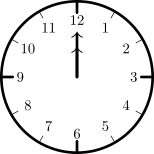
12 N 144 144 N 1000 $ .